Copacabana Art Deco: the history behind the facades
From the Copacabana Palace facade to the protected buildings on Avenida Atlantica, the style that defined the neighborhood between 1920 and 1950.
8/21/2026
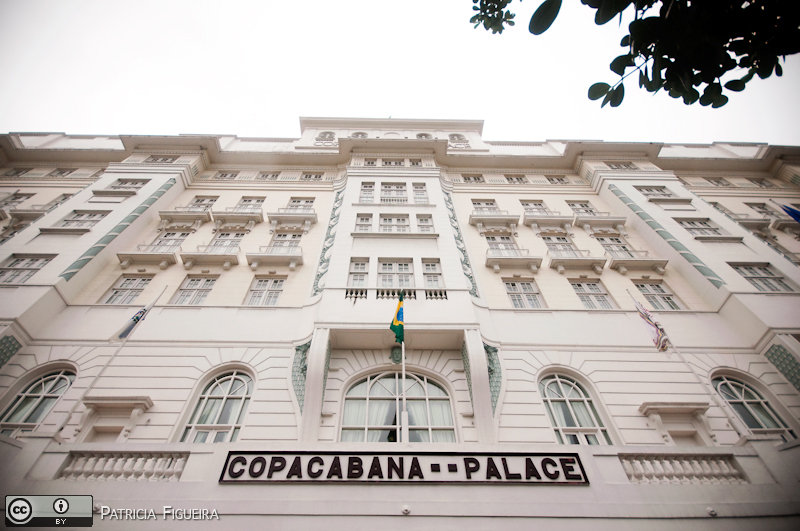
Long before it became a summer hotspot and postcard backdrop, Copacabana was one of Brazil's largest laboratories of Art Deco architecture. Between 1920 and 1950, the seafront gained buildings with vertical facades, imported granite, and animal sculptures over the entrances — a collection the City of Rio decided to protect by decree in 1992. Anyone walking along Avenida Atlantica today, three blocks from the Argos studios, crosses that open catalog without a sign or a guided tour.
The neighborhood that became a catalog of facades
Art Deco arrived in Rio as Copacabana expanded beyond the tunnel, when the neighborhood stopped being a fishing village and became an address for Rio's elite. The style — vertical, geometric, with restrained ornament instead of the earlier eclectic excess — suited the rush to build tall on a narrow strip of land between the sea and the hills. The result is a concentration of examples the City itself recognizes as a citywide reference: in 1992, municipal decree 11.448 created the Cultural Environment Protection Area (APAC) of Lido, covering Avenida Atlantica, Avenida Nossa Senhora de Copacabana, and nearby streets, to preserve buildings from 1920 to 1950.
Copacabana Palace: the landmark that opened the way
It all starts in 1923, when the hotel designed by French architect Joseph Gire opened on a still half-empty beach. Gire brought to Copacabana the vocabulary he knew from the French Riviera — classical facade, arches, symmetry — mixed with traits that anticipated the Art Deco that would dominate the neighborhood the following decade. The hotel was listed as a national heritage site by Iphan in 1989, and it remains the reference every building erected after it, on the same avenue, tried to engage with in some way.
The neighborhood doesn't hold a single isolated landmark — it holds an entire ensemble, and much of it is still where people live.
The 1920s and 1930s: the style's peak
After the Palace came the race to build residential towers. The Edificio Ribeiro Moreira, from 1928, on the corner of Rua Ronald de Carvalho and Avenida Atlantica, is considered the neighborhood's first major residential building — the landmark that turned Copacabana into a vertical address before it became Rio's densest seafront. Four years later, in 1932, came Edificio Guahy, on Ronald de Carvalho itself, number 181. In 1937, Edificio Labourdette, also on Atlantica, pushed the style further: rounded balconies and a recessed vertical column that deliberately evoke a ship's bow — a classic streamline moderne signature that closed out Brazil's Art Deco era. None of these three is a museum or an official tourist stop: they're residential buildings in daily use, which makes the walk more interesting — architecture that keeps working, not a display piece.
How to spot an Art Deco building on the seafront
- A very vertical facade, with lines running uninterrupted to the top of the building.
- Animal sculptures — lions, eagles, stylized figures — decorating the entrances.
- Imported granite and pink-toned cladding, rare in later Rio architecture.
- Rounded balconies or recessed columns that echo a ship's hull (streamline moderne).
- Restrained geometric ornament, without the curved excess of the earlier eclectic style.
The seafront guests cross every day
The Argos Esmeralda and Argos Safira studios sit in Edificio Armoleu, on Rua Barata Ribeiro, three blocks from the beach. Between the building's door and the sand, the walk crosses part of this collection — no plaque, no guided tour, just facades. For guests in town for a few days who prefer street history to a museum line, it's the kind of layer that rewards a 20-to-30-minute walk: leave early, before the heat, with the Copacabana Palace as the starting point and the rest of Atlantica as the route to Posto 6, looking up instead of straight ahead.
Based three blocks from the historic seafront
The Argos Esmeralda and Argos Safira studios sit on Rua Barata Ribeiro, between Posto 3 and Posto 4 — close enough to turn the Art Deco walk into a before-breakfast plan.
Studios in CopacabanaFrequently asked questions
Where are Copacabana's main Art Deco buildings?
The highest concentration is on Avenida Atlantica and Avenida Nossa Senhora de Copacabana, inside the area protected by the 1992 municipal decree (APAC do Lido). The Copacabana Palace (1923), Edificio Ribeiro Moreira (1928), and Edificio Labourdette (1937) are all on Atlantica.
Is the Copacabana Palace officially Art Deco?
French architect Joseph Gire's design blends classical French Riviera influences with traits that anticipated the Art Deco that would dominate Copacabana the following decade. The building was listed as national heritage by Iphan in 1989.
Can you visit the buildings inside?
Most are residential and not open to visitors — the experience is looking at the facades while walking along Atlantica. The Copacabana Palace is the exception: it welcomes guests and visitors in common areas like the lobby and restaurants.
How long does it take to see the main buildings on foot?
A roughly 20-to-30-minute walk along Avenida Atlantica, between the Copacabana Palace and Rua Ronald de Carvalho, covers the most-cited examples — unhurried, with stops to photograph facades.
Are the Argos studios close to this stretch of the seafront?
Yes. The Argos Esmeralda and Argos Safira studios sit on Rua Barata Ribeiro, three blocks from the beach — an easy walk that crosses much of the Art Deco collection on the way to the sand.